Savannah Map
Site Index
Contact
Random
Our Travel Books
Advertising / Press

Ebenezer – Home of the Salzburg Lutherans

All for Jesus The Story of a Faithful Woman Who for Jesus’ Sake Followed the Salzburgers to Ebenezer Georgia

A striking whethered gray memorial stone in Emmet Park pays tribute to a group of Lutherans from Salzburg who came to Georgia to escape religious persecution. Oglethorpe welcomed them with open arms, and suggested they settle a town along a river, about 25 miles north of the new colony’s capital. And Ebenzer was born.

Salzburger Ghost Town

Although we knew nothing about Ebenezer other than the text on the memorial, we decided to stop there during a recent day trip. Ebenezer is difficult to find, barely on the map, and we kind of doubted we’d find anything there. A “Dead End” sign greeted us as we turned onto Ebenezer Road; not very encouraging, but we discovered some signs of life at its end.

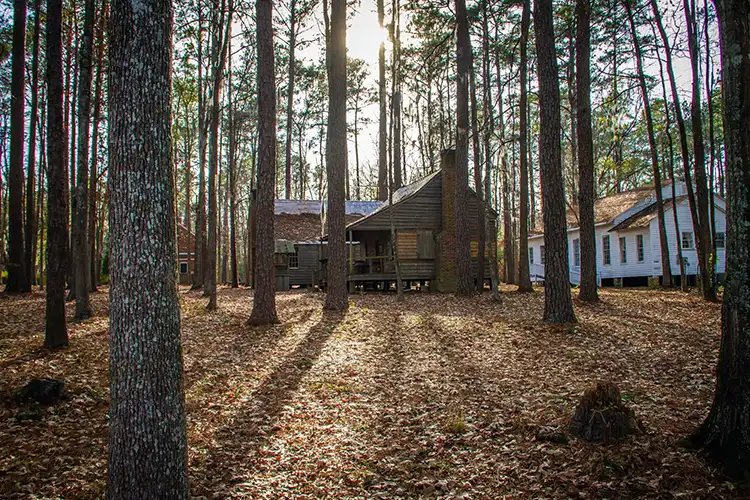
Stepping out of the car, we were swept into the arms of Ebenezer’s welcoming committee. An older man greeted us and led us around what’s left: a museum dedicated to the Salzburg Lutherans, the Jerusalem Salzburg Church built in 1769 and still in remarkable condition, and an original cabin filled with colonial artifacts of German and Austrian design.

Ebenezer doesn’t really exist anymore. But at its inception, the Lutheran community had been immediately successful. The town served briefly as the capital of Georgia, and was the home of a state governor. But the war with the British devastated Ebenezer, and it never recovered. In 1855, it was abandoned for good and the remaining residents were incorporated into the nearby city of Rincon.

This history was fascinating, as was seeing the original cabin and stepping inside the ancient church. We had a great time talking to our guide, his son, and another man who’s lived and worshiped there his whole life. Before Juergen had said more than two words, they had him pegged as German, making him flush and me laugh. We spent probably an hour chatting with them, and only reluctantly said goodbye to get back on the road home.

Super nice people, and our visit to Ebenezer was a lot more fun than we had figured it would be. On the way back into Savannah, I reflected on how diverse and interesting our country really is. An abandoned, historic town in the middle of the Georgia backwoods, founded by persecuted Austrians. Crazy.

Official Website: Georgia Salzburger Society

Location on our Day Trip Map

Ebenezer Swan Salzburger
Salzburger GA Church
Ebenezer Window
Wet Bricks
Ebenezer Bench
Salzburger Ebenezer
Johann-Martin-Boltzius
Ebenezer Open Air Church
Sugar Cane
Sugar Cane Press
Salzburger Tools
German Water Well
Ebenezer Ghost Town
Salzburger-House-1755
German Nachttop
German Waffle Iron
German Sewing Machine
Ebenezer Curtain
German Machine
German Tools
German High Tech
German Ant Trap
Ebenezer Fragrance
Ebenezer Couple Picture
Kate-Keebler-Neidlinger
Salzburger Coins
Old Ebenezer Clock

- Most Insane Festival we went (do check out the links – it’s incredible)

, , , , , , , , , ,
January 24, 2011 at 7:04 pm Comments (5)

Old Fort Jackson

The Forts That Defended America

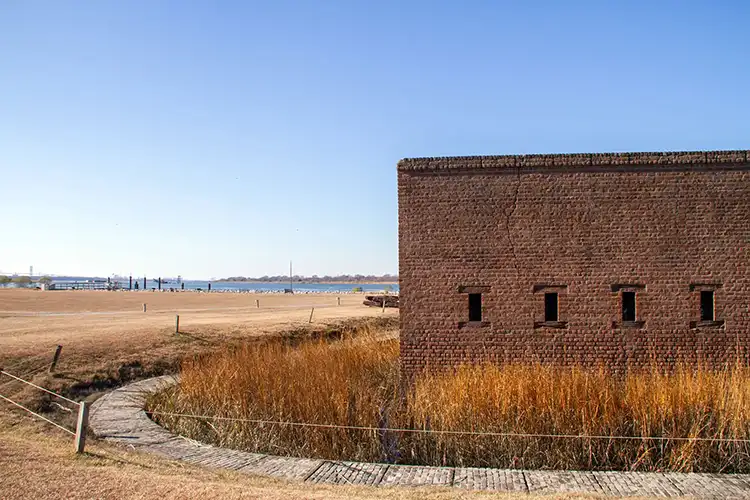
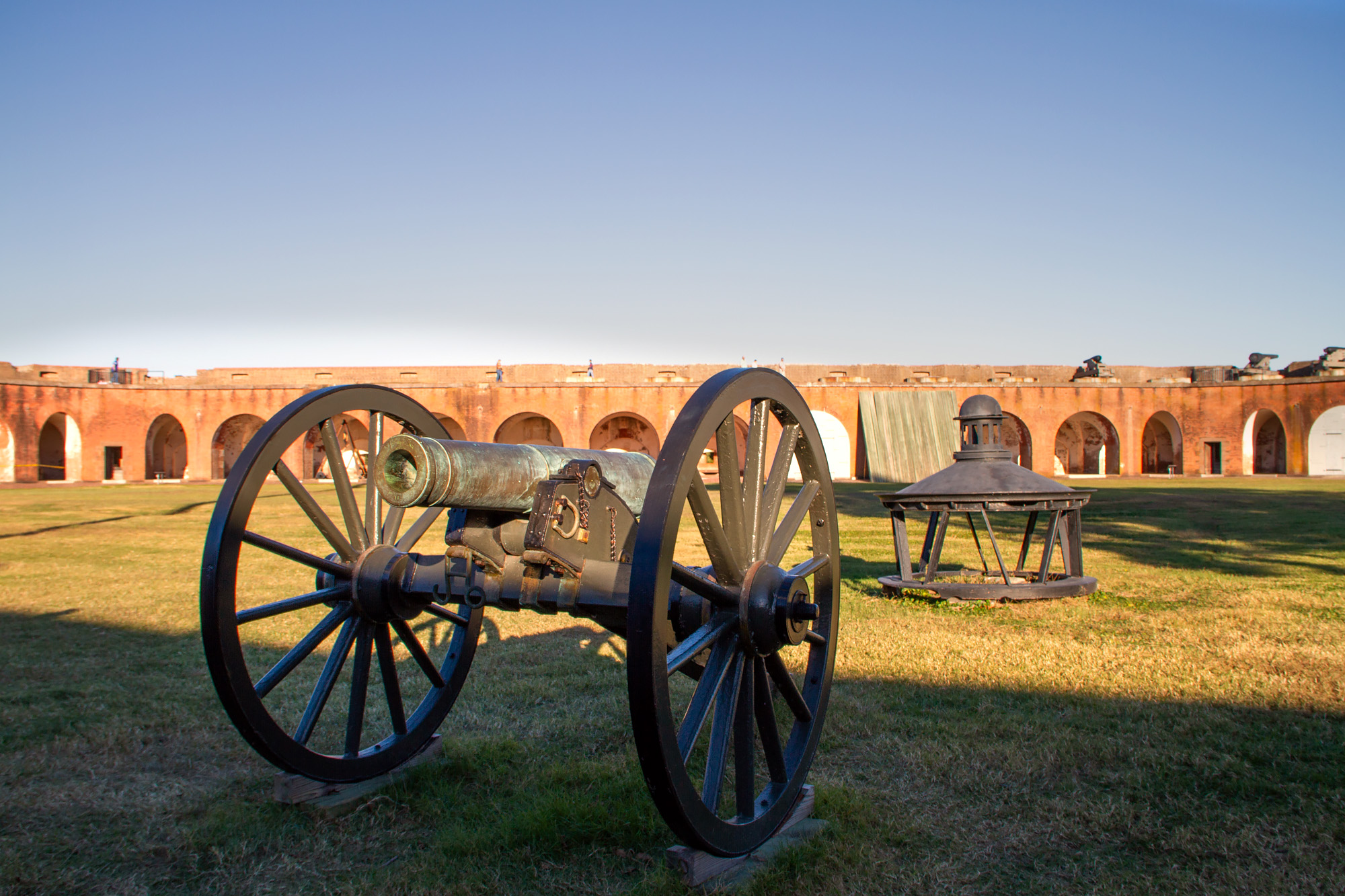
In 1808, with relations between Britain and our fledgling country quickly deteriorating, President Thomas Jefferson ordered the construction of Old Fort Jackson, to protect the important port of Savannah. Named for revolutionary hero James “Left Eye” Jackson, it was ready by the time we went to battle in the War of 1812, but never needed.

Fort Savannah

The fort would next be needed in the Civil War, and was quickly seized by Confederate troops. It was a powerful deterrent against the Union army who had seized Fort Pulaski out by Tybee Island, and Savannah was spared from attack. During the eclipse of the war, Sherman’s March to the Sea reached Savannah, and his troops easily seized the fort… although before they had abandoned it, the Confederates had destroyed everything useful inside.

So, Fort Jackson has not seen much battle in its 200-year history, meaning that even though it’s the oldest standing brick fort in the state, it’s also incredibly well-preserved. Just a few minutes from the city center, on the Islands Expressway out to Tybee, it’s a cool place to spend an hour and relive history. It was purchased by the Coastal Heritage Society in 1920 and completely restored in the 70s. Today, tourists can visit a museum in the fort’s rooms and witness a daily cannon firing.

Old Fort Jackson is less interesting than Fort Pulaski, if only because it never participated in any battles. But, it’s much closer to the city, so if you’ve not got much time and are itching to get into an old fort, it fits the bill.

Official Site
Location on our Day Trips Map

Visit Savannah
Old Fort Jackson
Savannah Fort
Fort Jackson Canon
Canon Stuffer
Savannah Rifle
Savannah Office Space
Savannah Tunnel
Fort Jackson Savannah

- Map of Savannah

, , , , , , ,
January 19, 2011 at 6:04 pm Comments (4)

First African Baptist Church

Books on: Black Church Beginnings

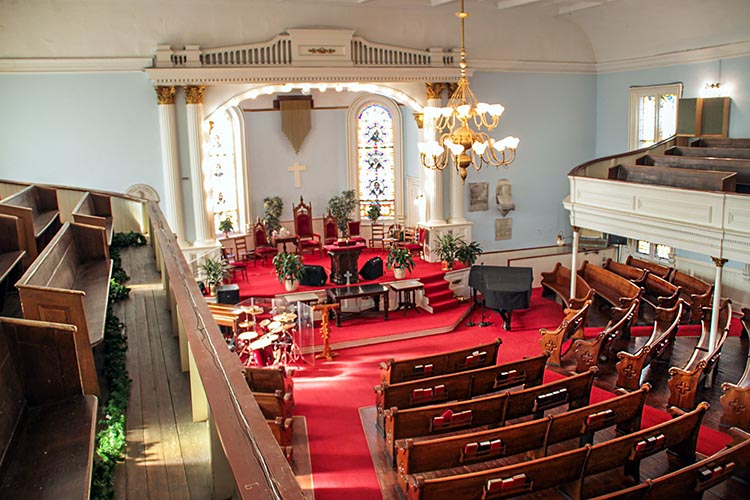
On Franklin Square, the First African Baptist Church is the oldest black church in North America. Founded by slaves in 1775, the church has a history nearly as old as Savannah itself.

First African Baptist Church

From the outside, the church isn’t all that impressive, but that changes once you step indoors. It’s beautiful, with curved pews pointing towards the pulpit and a pair of upper balconies for busy days. The church was built by slaves who, as you might imagine, didn’t have much money or time. Over the course of four years, they worked at night on the construction. That’s some faith — after a day of back-breaking work in the fields, to come and toil even longer.

Their first preacher was a slave, and since slaves educating each other was forbidden, he would regularly be taken out into Franklin Square and whipped, until his owner stepped up for him and forbid further punishment. Our tour guide was full of interesting anecdotes like this, and our hour long visit flew by.

The church was built with a secret floor underneath its real floor, and was a stop on the Underground Railroad. Never discovered by authorities, the crawlspace hid hundreds of runaway slaves and a tunnel led them to the Savannah river. To mask their true purpose, the floor’s breathing holes were bored in the shape of the Kongo Cosmogram; an African spiritual symbol often used by American slaves.

At first glance, the church’s ceiling looks rather plain — squares like waffles, as one kid on our tour said. But our guide explained that they represented the Nine-Patch Quilt, which served as beacons to slaves on the run. I never knew about that… so the ceiling is a touching tribute to the noble and secretive purpose of the church. Another interesting thing new to me was cursive Hebrew. The original pews built hundreds of years ago are still in use. On the ends of each pew, cursive Hebrew has been scratched into the wood. Our guide wasn’t able to translate any of it, but he did tell us how a few African tourists had visited recently and instantly recognized it. Apparently, it’s still used by Jewish communities in Africa.

Now this is the kind of stuff that totally interests me… Kongo Cosmograms, Underground Railroad Patchwork, Cursive Hebrew. If you’re the same, make sure to visit the First African Baptist Church, either for the tour (daily, at 11am and 2pm) or for Sunday service.

First African Baptist Church
23 Montgomery Street
Location on our Savannah Map
912-233-6597

First Baptist Church
Church Stage
Church Bench
Baptist Bible
Willis L Jones
Priests Savannah
Baptist Glass Work
First Savannah
Gas Lamp Savannah
Cursive Hebrew
Kongo Cosmogram
Last Meal Savannah
Savannah Safe
, , , , , , , , , , , , ,
January 14, 2011 at 1:31 pm Comments (4)

« Older Posts